
English
We believe that communication is the foundation of learning. Starting in our Nursery, we prioritise oracy – teaching pupils to speak and listen with confidence and respect, and building the listening and speaking skills essential for life. This verbal foundation and our systematic phonics program, turn sounds into a gateway for early reading, developing confident, fluent readers. As children grow, we nurture a lifelong love for reading and empower them to become creative, accurate writers. Together, this provides the foundational literacy tools every child needs to express themselves clearly, and succeed across the curriculum and beyond.


Oracy, Speaking and Listening at Great Horwood School
At Great Horwood Church of England School we believe oracy is at the heart of all learning as it enables us to communicate with others effectively for a variety of purposes. We believe that the ability to both speak and listen well is essential for children to articulate their feelings, ideas and opinions.
We are becoming greater listeners and speakers when:
-
Children can speak clearly and convey their ideas and opinions confidently
-
Children listen carefully to others ideas and opinions showing respect for them.
-
Children show expressions and emotions when performing in music, drama and musical productions.
Children are given as many opportunities as possible to become good listeners and speakers. In class pupils share their work, ideas and opinions. They question each other and respond with well thought out answers, justifying their views and opinions.
Children are able to speak and read aloud at Church services, worship and enrichment events for parents and the school community. Children visit the village hall regularly to meet members of the village community and welcome guests to the school.
Phonics and Early Reading at Great Horwood School
Approach to the teaching of Phonics in Seedlings Nursery, Reception and Key Stage 1
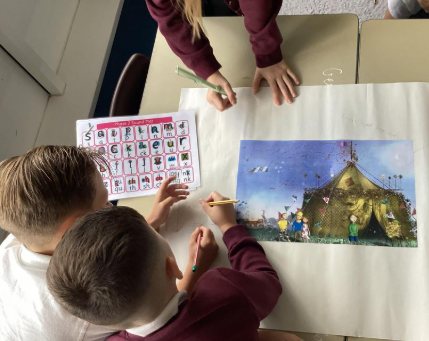
The teaching of phonics is an important part of the curriculum in Early Year's Foundation stage and Key Stage 1. We follow the ‘Little Wandle’ phonics scheme using ‘Letters and Sounds’, where children are taught the 44 phonemes that make up all the sounds required for reading and spelling. These phonemes include those made by just one letter and those that are made by two or more (digraphs and trigraphs).
Children are also introduced to the ‘Little Wandle’ letter formation rhymes to support handwriting and rhymes to support learning of digraphs and trigraphs. As the children move through the scheme and are secure in the first set of sounds, they are introduced to alternative ways of representing the same sound, eg ‘ee’ can be represented as ‘ee’, ‘ea’, ‘e-e’, ‘e’.
We ensure that our teaching of phonics is rigorous, structured and enjoyable. Children have discrete, daily phonics sessions where they are introduced to new phonemes, can practise and revise previous learning and have plenty of opportunities to apply the knowledge they have.
Children work with pace and are encouraged to apply their knowledge across the curriculum with any reading or writing activities. Within phase 2 children are introduced to alien words, here the children have to use their knowledge of phonics to blend sounds and read the words. Children are taught these by showing an alien picture next to the word to encourage them to blend the sounds they see rather than try and make them real words. Within all phases children are exposed to alien words that contain phoneme from all different phases.
At Great Horwood we use Collins Big Cat reading books to match the phonics currently being taught to relevant reading material. In Key stage 2 for those few children who still require phonics teaching within phase 2-5 phonics we use Big Cat phonics books for older readers.
Older free readers are able to choose books from a range of reading schemes which include: Oxford Reading Tree, Usborne Beginner Books, and Big Cat Phonics as well as free reading from the school library.
Reading at Great Horwood School
Reading Curriculum Statement
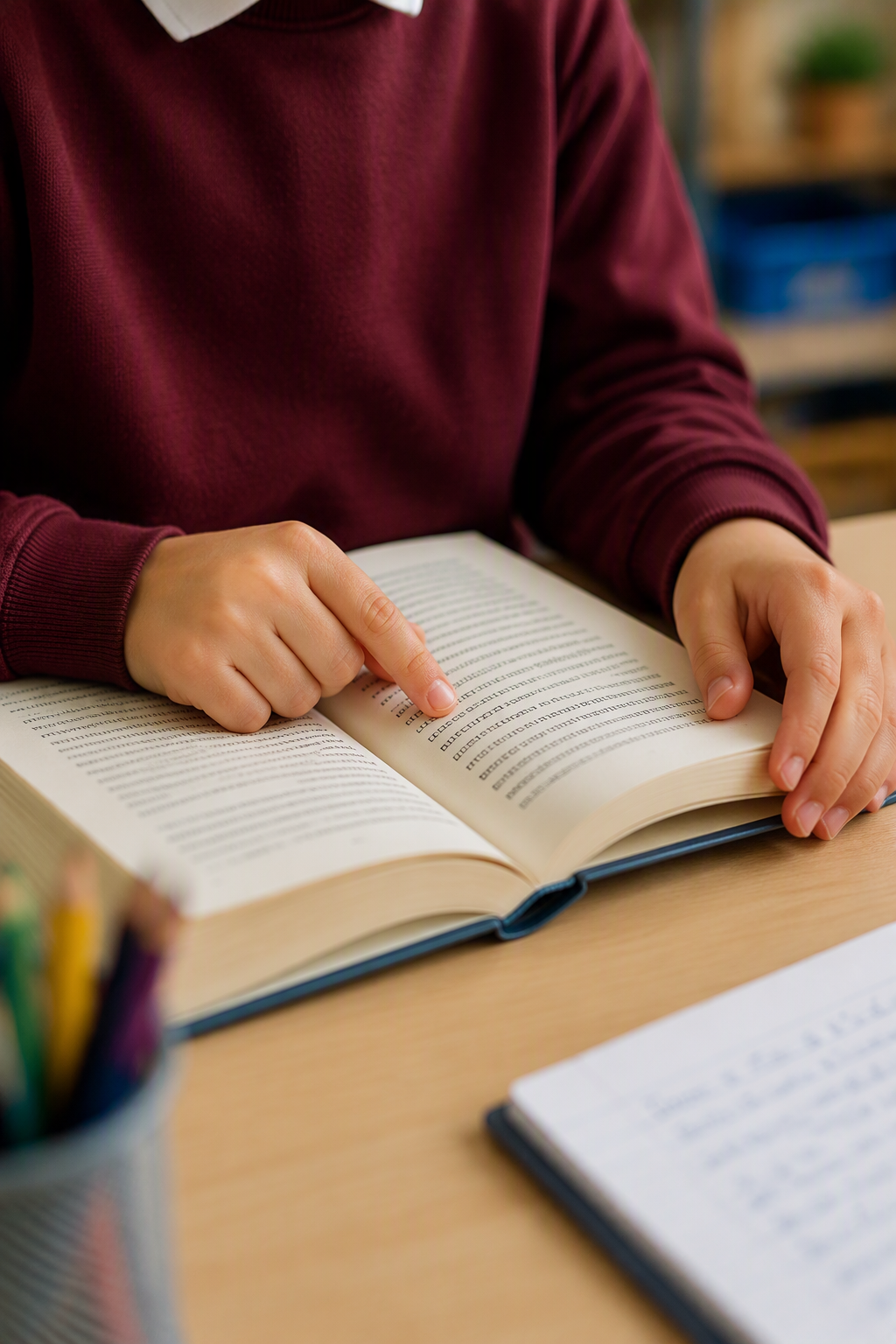 At Great Horwood CE School we are successful readers when:
-
Children and adults choose to read for pleasure and enjoyment, recommending and sharing books and positive reading experiences with others
-
Children can apply their knowledge of phonics confidently to support their development and improvement in reading
-
Children can read accurately, fluently and with good understanding
-
Children can independently read a wide range of fiction and non-fiction texts that enable them to access other areas of learning and the future curriculum
-
Children understand the texts they are reading and are able to retrieve information and justify their views and opinions
-
Children acquire a wide vocabulary, an understanding of grammar and knowledge of linguistic conventions for reading, writing and spoken language
-
Children read aloud with confidence and expression
-
We appreciate our rich and varied literary heritage
-
Children maintain a positive attitude about reading and continue to read for knowledge and pleasure at home using the school library to enhance their provision
-
We bring reading to life through their music, drama and performance
At Great Horwood Church of England School, the academic, emotional and spiritual well-being of all individuals is at the heart of all that we do; where everyone is valued. We are a safe, welcoming school within the heart of the village community that aims to provide all our children and adults with the learning opportunities to flourish, be healthy, grow in resilience and realise their full potential; being fully equipped and prepared for a successful future. Reading is the gateway to learning and has the highest priority across the whole curriculum.
We have a rigorous and sequential approach to reading where we aim to inspire confident children as readers; enabling them to become aware of reading as a source of communication, information, research, interest, and pleasure. Across the curriculum, children enjoy a range of texts, both fiction and non-fiction which are linked to our cross curricular topics which supports the acquisition of subject specific vocabulary. Throughout the school, children also read individually, share class novels, read in small, guided groups, and are read to by adults regularly. Through accurate assessment, where gaps in learning are identified, interventions and additional support ensure all children make progress to support them in accessing the full curriculum.
Aims and Purposes of Reading:
‘The overarching aim for English in the national curriculum is to promote high standards of language and literacy by equipping pupils with a strong command of the spoken and written word, and to develop their love of literature through widespread reading for enjoyment.’
Curriculum Intent for Reading across Foundation Stage, Key Stage 1 and Key Stage 2
Intent
At Great Horwood CE Primary School, we strive to help our children develop into articulate and imaginative communicators, who are well-equipped with the basic skills they need to become life-long learners; English learning is key in this. We aim to ensure all of our children develop a genuine love of language and the written word, through a text-based approach. Careful links are made across the curriculum to ensure that children’s English learning is relevant and meaningful: where possible linking our reading, writing to our cross curricular topics. We ensure that children develop an understanding of how widely reading is used in everyday life and, therefore, how important and useful the skills are that they are learning.
Prioritising Reading
Reading at Great Horwood is prioritised by:
-
Adults’ passion for reading and sharing books through the school.
-
Daily phonics from Nursery and Early Years, through Key Stage 1 and where necessary in Key Stage 2.
-
The teaching of reading being an integral part of weekly lessons across school.
-
Class or small group reading planned according to the needs of the year group.
-
Teachers reading to children frequently through all year groups weekly.
-
Vibrant and inviting book corners in classrooms to engage pupils.
-
Variety of text types and a growing complexity of texts in all classrooms.
-
All children have reading books to take home and daily sharing of books at home is encouraged throughout the school.
-
Parental are strongly encouraged to read to and with their child at home
-
English units starting with high quality texts, to support high quality teaching of English.
-
Book weeks and World Book Day celebrates reading, authors, enjoyment of reading
-
Pupils are given opportunities to read allowed in class, worship, and performances
-
Being part of a planned cohesive curriculum with clearly identified skills enables connections and links to be made and texts meaningful for children.
Implementation
Our whole curriculum is shaped by our school vision which aims to enable all children, regardless of background, ability, additional needs, and to flourish to become the very best they can be.
We teach the National Curriculum, supported by a clear skills and knowledge progression. This ensures that skills and knowledge are built on year by year and sequenced appropriately to maximise learning for all children.
Early Reading and Phonics
In EYFS and KS1 we use the ‘Little Wandle’ phonics accredited scheme alongside Letters and Sounds to teach basic phonic skills. The children are assessed and organised into groupings according to the phonics phase they are working within. The systematic teaching of phonics ensures children make rapid progress in the early stages allowing them develop strategies to decode and build fluency. The reading books the children take home are linked to the phonic phase they are working within. The Collins Big Cat ensures the specific sounds children are learning in their phonic sessions are matched in their reading material.
Implementation for the Teaching of Phonics
Phonics is taught daily for Foundation Stage, Key Stage 1 and Key Stage 2 pupils who need it. Foundation pupils will begin their phonics journey when they join Great Horwood School (and/or Seedlings Nursery) with phase 1 phonics and move progressively onto phase 2 following our baseline assessments. Children follow letters and sounds order of learning sounds and use ‘Little Wandle’ to support with actions and rhymes. Formal phonics teaching starts as soon as the children are at an appropriate stage in their development and able to focus on the teaching of phonics. Children not yet ready for phase two work in smaller groups or individually with a range of phonics activities available as part of our continuous provision. Daily rhymes, songs, patterns and recap phase one phonics and support in developing the children's speaking and listening skills. Phonics is assessed formatively daily and changes are made to planning and pupil groupings if necessary. Children in Year 2 who did not pass phonics check will be given additional phonics support and sessions during the week.
A detailed phonics progression can be found on the school Website on the English Curriculum page or by following the link below:
Implementation for the Teaching of Reading
-
Children start reading books carefully matched to phonics sounds taught and learnt.
-
Alongside phonics, children learn key words from the outset. They make sentences and begin sentence building using those key words.
-
Children follow and join in when sharing books daily in our Seedlings Nursery and Acorns Reception class, imitating nursery & story rhymes, singing songs,patterns, and phrases.
-
Individual readers are heard as often as possible throughout the week in school and at home.
-
Games for identifying phonemes/graphemes/general sounds support EYFS Phase one children as part of the EYFS provision.
-
Guided reading sessions focus on acquiring reading skills and knowledge to develop understanding of texts through careful teacher questioning, whole class discussion, and reading based activities.
-
Whole class Guided reading and small group guided reading in Key Stage 1 and Key Stage 2 allows discussion to delve deeper to widen vocabulary and understanding of texts.
-
Lessons in other areas of the curriculum have books associated to support knowledge and develop abilities to learn through texts and develop research skills.
-
Children in KS2 are actively taught reading skills through whole class guided reading and this is applied across other subjects of curriculum with retrieval, gaining knowledge and understanding.
-
Children are supported at home by regular reading of books and key words.
-
Children listen regularly to an adult reading aloud through English lessons and for pleasure.
-
Formative assessments are made daily and planning adapted to incorporate misconceptions or sounds not known.
-
Pupil take comprehension reading tests at the end of each long term to support teacher judgements in individual reading assessments.
How do we ensure all children keep up and catch up?
-
Reading Progress of all children is reviewed half termly and appropriate interventions or strategies are identified to ensure individual pupil’s needs are being met and progress is being made.
-
Where children are not making expected progress, additional phonics sessions are provided with extra reading times for individual reading to an adult
-
Reading books are closely matched to the phonics phases in FS/KS1 to reinforce phonics and some isolated sounds for particular difficulties.
-
A variety of reading interventions; 60 second reads and comprehension activities to support the teaching of reading are available for teachers to use to support pupil progress.
-
Sets of low ability, high interest texts for Key Stage 2 keep pupils motivated and supported in their reading where needed.
Impact
Expectations in Reading-End points
By the end of Reception most children will attain the Development Matters outcomes for 5 year olds
Reading:
-
Children read and understand simple sentences.
-
They use phonic knowledge to decode regular words and read them aloud accurately.
-
They also read some common irregular words.
-
They demonstrate understanding when talking with others about what they have read.
By the end of Key Stage 1, most pupils will attain the expected standard from the national curriculum outcomes for 7 year olds and will be able to:
• read accurately most words of two or more syllables
• read most words containing common suffixes
• read most common exception words
In age-appropriate1 books, the pupil can:
• read most words accurately without overt sounding and blending, and sufficiently fluently to allow them to focus on their understanding rather than on decoding individual words.
• sound out most unfamiliar words accurately, without undue hesitation
In a book that they can already read fluently, the pupil can:
• check it makes sense to them, correcting any inaccurate reading
• answer questions and make some inferences
• explain what has happened so far in what they have read
By the end of Key Stage 2 most children will attain the age-related expectations for 11-year olds and will be able to:
Develop positive attitudes to reading and understanding of what they read by:
-
listening to and discussing a wide range of fiction, poetry, plays, non-fiction and reference books or textbooks
-
reading books that are structured in different ways and reading for a range of purposes
-
using dictionaries to check the meaning of words that they have read
-
increasing their familiarity with a wide range of books, including fairy stories, myths and legends, and retelling some of these orally
-
identifying themes and conventions in a wide range of books English – key stages 1 and 2 26 Statutory requirements
-
preparing poems and play scripts to read aloud and to perform, showing understanding through intonation, tone, volume and action
-
discussing words and phrases that capture the reader’s interest and imagination
-
recognising some different forms of poetry [for example, free verse, narrative poetry]
Understand what they read, in books they can read independently, by:
-
checking that the text makes sense to them, discussing their understanding and explaining the meaning of words in context
-
asking questions to improve their understanding of a text
-
drawing inferences such as inferring characters’ feelings, thoughts and motives from their actions, and justifying inferences with evidence
-
predicting what might happen from details stated and implied
-
identifying main ideas drawn from more than one paragraph and summarising these
-
identifying how language, structure, and presentation contribute to meaning
-
retrieve and record information from non-fiction
-
participate in discussion about both books that are read to them and those they can read for themselves, taking turns and listening to what others say.
Progression of skills in reading
The progression of skills is ensured through the use of the National Curriculum which guides teachers in planning and setting appropriate and challenging expectations. The reading progression documents (below) illustrate how these objectives are set out in a sequential manner so that all abilities across the age ranges can be met effectively.
Wider impact of reading across the curriculum
Spiritual, Moral, Social &Cultural (SMSC) Development in English-reading
Spiritual
Reading supports spiritual development by engaging children with poetry, fiction and drama. Through English, children can explore and engage with the feelings and values found in a wide range of genres. In responding to a poem, story or text; pupils will be asked higher level questions to deepen their spiritual thinking such as: ‘How would you feel if you were the person in the story?’ or ‘Where have you met these ideas before?’ Pupils are encouraged to respond to texts through drama and hot seating or by an appreciation of the beauty of language, e.g. poetic language within stories and poems.
Moral
Reading supports moral development by enabling children to look at, discuss and evaluate a range of social and moral issues found in a wide range of genres, including newspapers, non-fiction texts and fiction. By exploring stimulus for thinking about the consequences of right and wrong behaviour; pupils can speculate and apply their learning to their own lives. When they do this they are developing their speaking, listening and higher order thinking skills, e.g. The Iron Man, Stig of the Dump, and The Tempest. We also encourage pupils to consider different perspectives and show empathy for different characters.
Social
Reading supports social development by helping children to understand how written and spoken language has changed over time. It also covers social attitudes to the use of language. By providing pupils the texts and opportunities to develop an understanding of and debates about social issues, e.g. gay rights, bullying, stereotyping, conformity, and homelessness. We encourage the pupils to work collaboratively, e.g. as part of a dramatized response; to prepare a verbal response to an argument; and to evaluate each other’s work.
We aim to provide appropriate opportunities for talk in a range of settings, to a range of audiences and for different purposes, e.g. in class or school sharing of work, Worship, assemblies, performances, and structured discussions.
Cultural
Reading supports cultural development by exposing children to a wide range of written language from a range of cultures. In addition, it supports children to become confident and competent in their own language which is vital to their individual identity. We aim to provide opportunities for pupils to engage with texts from or representing different cultures, e.g. Handa’s Surprise, super Duper You, Hidden Figures, and The Arrival. Through events such as ‘Share a Story’ pupils share stories from their own cultures and backgrounds creating the idea that ‘everyone has a story to tell’. By providing opportunities for pupils to engage with texts that represent our strong literary heritage, e.g. The Tempest, The Iron Man, and The Indian in the Cupboard, and by providing opportunities for children to visit the theatre and experience theatrical productions.
Writing at Great Horwood School
WRITING CURRICULUM STATEMENT
Aims
At Great Horwood Church of England School, we strive to help our children develop into articulate and imaginative communicators, who are well-equipped with the basic skills they need to become life-long learners; English learning is key in this. We aim to ensure that all our children develop a genuine love of language and the written word, through a text-based approach. We are committed to ensuring that our approach is inclusive and equitable, offering every child the support they need to fully engage with the curriculum and reach their full potential. Through our rich and varied English curriculum, we aim to inspire and excite our children and foster a thirst for writing to enable them to express themselves confidently, as writers, offering them an inspirational and exciting curriculum with original materials and opportunities that support and challenge them as they prepare for their lives beyond primary school. In our ever-changing world, pupils need to have the knowledge, skills and attitudes that will enable them to flourish as individuals and to be successful.
Intent
Careful links are made across the curriculum to ensure that children’s English learning is relevant and meaningful: where possible linking our reading and writing to the cross curricular topics being taught that term. We ensure that children develop an understanding of how widely writing is used in everyday life and, therefore, how important and useful the skills are that they are learning.
‘The overarching aim for English in the national curriculum is to promote high standards of language and literacy by equipping pupils with a strong command of the spoken and written word, and to develop their love of literature through widespread reading for enjoyment.’
-
read easily, fluently and with good understanding
-
develop the habit of reading widely and often, for both pleasure and information transferring the use of language into their own writing
-
acquire a wide vocabulary, an understanding plus application of grammar and knowledge of linguistic conventions for reading, writing and spoken language
-
appreciate our rich and varied literary heritage
-
write clearly, accurately and coherently, adapting their language and style in and for a range of contexts, purposes and audiences
-
use discussion to learn; they should be able to elaborate and explain clearly their understanding and ideas for writing
-
are competent in the arts of speaking and listening, making formal presentations, demonstrating to others and participating in debate.
At Great Horwood CE School we are successful writers when:
-
Children love to write, communicating their ideas, thoughts and opinions
-
Children use their knowledge of reading, phonics and words in their writing
-
Children know the purpose and audience of their writing, reflecting on their own and peers writing
-
Children can write in a variety of genres and know the features that they need to include in their writing
-
Children use editing and redrafting skills to improve their writing for the reader, understanding that word choice and style changes can bring about improvements
-
Children can communicate their writing in a neat legible style.
Implementation
Our whole curriculum is shaped by our school vision of ‘I am the vine and you are the branches,’ John 15:5 which aims to enable all children, regardless of background, ability, and additional needs, to flourish to become the very best they can be. We teach the National Curriculum, supported by a clear skills and knowledge progression which has carefully been tailored to the needs of all children here at Great Horwood School. We have devised skills and knowledge that are built on year by year and sequenced appropriately to maximise learning for all children to thrive.
We aim to develop children’s ability to produce well-structured, detailed writing in which the meaning is made clear, and which engages the interest of the audience or reader. Particular attention is paid throughout the school to the formal structures of English: grammatical detail, punctuation and spelling.
Teachers clearly model writing skills and document the learning journey through a consistent working wall, guided writing sessions are used to target specific needs of classes, groups and individuals. When doing so, they follow the structure of ‘I do, we do together, you do together, you do it on your own.’
Throughout Early Years, Key Stage 1 and Key Stage 2, we teach writing through a text-based approach, which allows us to meet the needs of the children that we are teaching – through choosing a text that will engage, inspire and motivate. As well as reading a wide variety of genres, children are given frequent opportunities to develop their skills in writing in different genres. Children have opportunities to write at length, in extended, independent writing sessions at the end of a unit of work – applying their taught skills to an unsupported piece of writing.
Through the different units taught, children write both fiction and non-fiction pieces half termly applying the skills taught in context. Children are also given the opportunity for greater ownership of the writing at key points through each term so that they write as writers, make decisions about what to include, who the intended audience is and what the purpose is for the piece. Feedback from adults, peers and self-review is a key part of developing ourselves as writers.
While children learn the skills of writing and developing as writers within English lessons, their skills are applied in all aspects of the curriculum where they have opportunities to write for a variety of purposes, particularly in science, history and geography but also in more practical subjects such as design and technology within the design and evaluate sections of the lessons for example.
Children are taught punctuation and grammar skills, appropriate to their year group, within our text-based approach to planning, allowing opportunities to identify, practice and consolidate grammatical understanding, whilst also being immersed in a text. Children then apply the grammar and punctuation skills that they have learnt in their extended pieces of writing.
Spelling:
At Great Horwood, spelling is taught regularly in focused sessions within each class. Learning to recognise the high frequency words on sight is crucial in developing fluency and accuracy in reading and then writing. High frequency words are the words that appear most often in printed materials. Common exception words are referred to as ‘tricky words’, as the children are unable to use their phonic knowledge to decode every part of the word. Once children are confident in reading and spelling common exception words, they are taught spelling rules and are encouraged to apply these rules in their writing. Class teachers use the spelling rules as set out in the National Curriculum. Little Wandle Bridge to Spelling is used in Year 2, progressing to Oak Academy spelling units to support the teaching of the different spelling rules. Spellings are sent home in each year group as part of the children’s home learning. Non-negotiable spellings are evident in each classroom along with the use of word mats and word of the week to support accurate spelling while in the composition stage of writing.
Phonics:
At Great Horwood School we follow the Little Wandle accredited scheme and approach to teaching phonics. The teaching of phonics begins in EYFS and builds progressively through Key stage 1, continuing in key stage 2 for some pupils. Emphasis is placed on listening carefully to sounds, then blending and segmenting sounds and words, being able to write and spell these accurately. Dictation is an important aspect of learning phonics and develops pupils as readers and writers.
At Great Horwood children are assessed in their phonics each half term and taught in groups according to their learning need. Opportunities for reinforcement of phonics and application of phonics in other curriculum areas are provided.
Vocabulary:
At Great Horwood, providing a vocabulary rich environment is of a significant focus in not only our writing but, across all curriculum subjects within our topic-based curriculum. To support the implementation of this, all classes have a ‘word of the week’ which is relevant to learning taken place. In Early Years, this is displayed on a vocabulary wheel, spoken, and used within provision and learning. In KS1, this also takes place but, is sometimes applied in their writing with scaffolding. In KS2, this is extended further where there is a display which shows the word with a dictionary definition and in context in several sentences.
Other ways we scaffold and extend the use of vocabulary, is ensuring that all children across the school are provided with relevant resources to scaffold their learning including, knowledge organisers, writing word mats grammar and punctuation mats, phonics word mats, dictionaries and thesauruses.
Impact
The successful approach to writing at Great Horwood CE School results in an engaging, high-quality writing education, that provides children with the skills to succeed in all curriculum areas. By the time our children leave our school they will:
-
Make good or better progress throughout the school from their starting points
-
Have a love for writing and write for enjoyment
-
Be able to produce written work in all areas of the curriculum to a high standard
-
Be confident to write for a range of different purposes
By the end of Reception most children will attain the Development Matters outcomes for 5 yr olds
Writing:
-
Children use their phonic knowledge to write words in ways which match their spoken sounds.
-
They also write some irregular common words.
-
They write simple sentences which can be read by themselves and others.
-
Some words are spelt correctly, and others are phonetically plausible.
By the end of Key Stage 1, most pupils will attain the expected standard from the national curriculum outcomes for 7-year-olds and will be able to:
-
write simple, coherent narratives about personal experiences and those of others (real or fictional)
-
write about real events, recording these simply and clearly
-
demarcate most sentences in their writing with capital letters and full stops, and use question marks correctly when required
-
use present and past tense mostly correctly and consistently
-
use co-ordination (e.g. or / and / but) and some subordination (e.g. when / if / that / because) to join clauses
-
segment spoken words into phonemes and represent these by graphemes, spelling many of these words correctly and making phonically plausible attempts at others
-
spell many common exception words*
-
form capital letters and digits of the correct size, orientation and relationship to one another and to lower-case letters
-
use spacing between words that reflects the size of the letters.
Some children may have attained above the expected standard and will be able to:
-
write effectively and coherently for different purposes, drawing on their reading to inform the vocabulary and grammar of their writing
-
make simple additions, revisions and proof-reading corrections to their own writing
-
use the punctuation taught at key stage 1 mostly correctly^
-
spell most common exception words*
-
add suffixes to spell most words correctly in their writing (e.g. –ment, –ness, –ful, –less, –ly)*
-
use the diagonal and horizontal strokes needed to join some letters
By the end of Key Stage 2 most children will attain the age-related expectations for 11-year-olds and will be able to:
-
write effectively for a range of purposes and audiences, selecting language that shows good awareness of the reader (e.g. the use of the first person in a diary; direct address in instructions and persuasive writing)
-
in narratives, describe settings, characters and atmosphere
-
integrate dialogue in narratives to convey character and advance the action
-
select vocabulary and grammatical structures that reflect what the writing requires, doing this mostly appropriately (e.g. using contracted forms in dialogues in narrative; using passive verbs to affect how information is presented; using modal verbs to suggest degrees of possibility)
-
use a range of devices to build cohesion (e.g. conjunctions, adverbials of time and place, pronouns, synonyms) within and across paragraphs
-
use verb tenses consistently and correctly throughout their writing
-
use the range of punctuation taught at key stage 2 mostly correctly^ (e.g. inverted commas and other punctuation to indicate direct speech)
-
spell correctly most words from the year 5 / year 6 spelling list, * and use a dictionary to check the spelling of uncommon or more ambitious vocabulary
-
maintain legibility in joined handwriting when writing at speed.
Some children may have attained above the expected standard and will be able to:
-
write effectively for a range of purposes and audiences, selecting the appropriate form and drawing independently on what they have read as models for their own writing (e.g. literary language, characterisation, structure)
-
distinguish between the language of speech and writing and choose the appropriate register • exercise an assured and conscious control over levels of formality, particularly through manipulating grammar and vocabulary to achieve this
-
use the range of punctuation taught at key stage 2 correctly (e.g. semi-colons, dashes, colons, hyphens) and, when necessary, use such punctuation precisely to enhance meaning and avoid ambiguity.
Progression in Writing
Progression is ensured using the National Curriculum and writing framework which guides teachers in planning and setting appropriate and challenging expectations. The progression documents on the website illustrate how these objectives are set out in a sequential manner so that all abilities across the age range needs can be met effectively.
Wider impact of writing and books studied in English
Inclusivity and Equality
Great Horwood Church of England School is dedicated to fostering inclusivity and ensuring equality of opportunity for all pupils. When planning and teaching writing, staff will make reasonable adjustments to support the diverse needs of each pupil as an individual.
Specialised resources and tools for children with Special Educational Needs (SEN) will be purchased from the SEN budget and maintained by TurnItOn.
Lesson plans will scaffold learning in multiple ways, ensuring that all pupils can access high-quality, inclusive, quality first teaching. For pupils from disadvantaged backgrounds, with SEN, or who have English as an additional language, tasks will be broken down into smaller components to provide achievable goals. This approach enables all children to build upon prior knowledge, reinforcing their understanding of the writing process and enabling them to reach their full potential.
Reasonable adjustments in the Writing Curriculum could include:
-
Allocating adult support;
-
Providing additional support materials (e.g., visual aids such as photographs, Makaton symbols, concept boards);
-
Offering alternative resources (e.g., use of assistive technology, alternative materials for pupils with visual or hearing impairments);
-
Modifying tasks (e.g., working on the same objectives but recording work through different mediums such as digital, verbal, or visual representation);
-
Using pre-teaching strategies and knowledge organisers;
-
Incorporating images, videos, and experiences (e.g., trips) to enrich cultural capital;
-
Supporting pupils with reading and writing difficulties through scaffolded tasks, alternative recording methods, chunking of learning, and opportunities to revise key concepts;
-
Providing group work, voice typing, or scribes for pupils who need support with written expression;
-
Modelling tasks to avoid overloading working memory;
-
Offering small group work and mixed ability grouping for pupils with low self-esteem, using scaffolds and chunking to build confidence and success.
This commitment ensures that every child, regardless of background or learning needs, can thrive in writing lessons. For more information, see the ‘SEN Policy.’
Spiritual, Moral, Social & Cultural (SMSC) Development in English-writing
Spiritual
-
English supports spiritual development by engaging children with poetry, fiction and drama.
-
Through English, children can explore and engage with the feelings and values found in a wide range of genres.
-
In responding to a poem, story or text; pupils can be asked ‘I wonder what you wonder?’ ‘How would you feel if you were the person in the story?’ ‘Where have you met these ideas before?’e.g., when responding to text through drama or Real Reading thinking stems. By appreciating the beauty of language, e.g., poetic language within stories and poems.
Moral
-
English supports moral development by enabling children to look at, discuss and evaluate a range of social and moral issues found in a wide range of genres, including newspapers, non-fiction texts and fiction.
-
By exploring stimulus for thinking about the consequences of right and wrong behaviour; pupils can speculate and apply their learning to their own lives.
-
When they do this they are developing their speaking, listening and higher order thinking skills. E.g., Fairy tales, myths and legends, Wonder, The Iron Man, Stig of the Dump, The Tempest. By considering different perspectives and showing empathy
Social
-
English supports social development by helping children to understand how written and spoken language has changed over time. It also covers social attitudes to the use of language.
-
By supporting conceptual and language development through an understanding of and debates about social issues, e.g., refugees, bullying, stereotyping, conformity, homelessness.
-
Work collaboratively, e.g., as part of a dramatized response; to prepare a verbal response to an argument; to evaluate each other’s work.
-
By providing opportunities for learning to continue at home e.g., through homework projects; through Reading Together events; through spelling games.
-
By providing opportunities for talk in a range of settings, to a range of audiences and for different purposes. E.g., worship, assemblies, performances and structured discussion.
Cultural
-
English supports cultural development by exposing children to a wide range of written language from a range of cultures.
-
In addition, it supports children to become confident and competent in their own language which is vital to their individual identity.
-
By providing opportunities for pupils to engage with texts from or representing different cultures, e.g., Black History, The Great Kapok Tree, the Rain Player. Through events such as ‘Share a Story’ pupils share stories from their own cultures and backgrounds creating the idea that ‘everyone has a story to tell’.
-
By providing opportunities for pupils to engage with texts and authors that represent our strong literary heritage, e.g. Julia Donaldson, AA Milne, Shakespeare, Dickens, Morpurgo, Ted Hughes, Saches, J Wilson, JK Rowling and Anthony Browne.
-
By providing opportunities for children to visit the theatre and experience theatrical productions.